From Too Weak to Hold a Spoon to Hiking Table Mountain
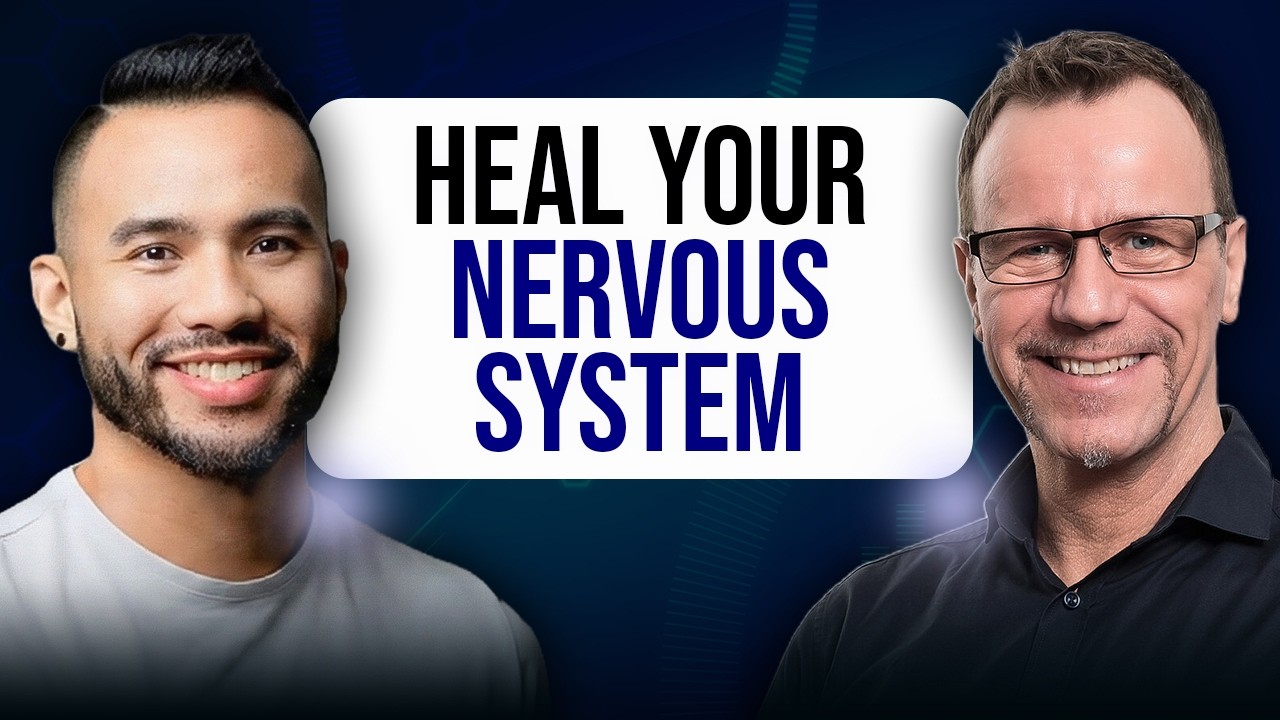
Watch Marco's full recovery interview
"I was finally able to walk in my beloved forest, and I just smiled, because I was in the moment."
Individual results vary. This is one person's experience and is not a guarantee of specific outcomes.
Key Takeaways From Marco's Recovery
| Condition: | CFS after a virus that took his voice and left him too weak to hold a spoon. |
| Severity: | Between bedridden and couch bound. A few minutes of TV brought on dizziness, and he had to lie down again after every attempt to move. |
| What worked: | CFS Recovery's recovery system, built on nervous system retraining based on neuroplasticity protocols, plus coaching with Ariel and a graded return to work his employer never rushed. |
| Now: | Back to full-time work as an IT team lead, hiking Table Mountain, and traveling South Africa. |
Marco's Story: Living With CFS
I'm from Germany, close to Munich. I work in IT as a team lead and I love doing sport and lots of other cool stuff.
It all started with a virus. The first evening I had throat pain so intense I'd never felt anything like it in my whole life. It really took my breath away, and it lasted two or three days. Then all the cold-like symptoms came in and I lost my voice completely. I had to write things down.
It lifted a bit after some days, and then I got so weak. I was sweating all night long. My wife helped me to the bathroom to take a shower and I had to lie down again instantly, on the couch, because my bed needed to dry. Then after a few days I got so weak I couldn't hold my spoon. Couldn't hold my spoon. That's when the fear kicked in, because I'd never experienced anything like that.
The days went like this. I'd lie on the couch and try to read something or put the TV on, and after a few minutes I'd get so dizzy that I needed to sleep. Audiobooks lasted a bit longer, but they'd bring the dizziness too. Around noon I'd start sweating again and go back to bed for the rest of the day. This repeated for days. It was really frightening.
We checked it and it wasn't COVID. My doctor sent me to a lung specialist and a heart specialist and I had everything checked. I spent a night in hospital for more intensive tests. The doctor there told me I have the blood of an 18-year-old man and a heart like someone who exercises regularly. There was nothing to find.
After a couple of weeks I hurt myself and had an open wound, and my brain combined that with the story of a rare virus getting into my nervous system. Then I had stabbing sensations all over my body, especially where the wound had been. It made me overthink even more. Later the heart palpitations and the sleep disturbances came in too, and I'd lost about five kilos of muscle.
At my work I have a coach who's coached the team leads for years. When I had to cancel a session with her, she told me she'd heard about CFS and that she had two other clients with the diagnosis who joined this program and recovered fully. I'm so grateful to her for just letting me know, because in the darkest moments that was my hope.
The first thing I learned was the root cause. That it's the nervous system, and that one thing explains all the symptoms I'd been having. And that there's a plan, a process, and help. Before I even joined I felt more confident that nothing bad would happen if I drove to our lake and walked for three or four minutes and sat down and came back. Then some days later I took a book with me and tried to read more than half a page on a bench.
I'm a guy who needs concrete, detailed explanation. I'm not a good learner from theory. On one call another Thriver asked about vertigo, about that feeling when you try to walk and you think you'll fall down. Junior told her to start dancing in that moment, or sing along, or put music on. That clicked instantly with me. I tried it and it made me smile. And I saw I wasn't alone with my symptoms, and that I could learn from the answers other people got.
I was out of work three months completely. Then my health insurance sponsored a reintegration program at one hour a day, doing easy tasks with one topic to focus on. Two hours in October, three in November, three in December, five a day by February. Then the program stopped and I had to go from five hours to eight in a month. What really helped was the understanding of my bosses. They let me do everything at my own pace and never pushed me at all. If I'd been pushed, I don't know where I'd be today.
In September we had the Thriver meetup in Portugal, and that was one of the biggest events of my life. By then I'd already left the worst behind. I got back to my hotel around midnight and I couldn't sleep for three hours. I just lay there listening to my most beautiful music with a constant smile on my face.
My golden nuggets are these. Belief, or really a knowing. I fully trusted the coaches and the program, because everything I saw in the community and learned on the calls made total sense, so I had maximum confidence. Then calming down. Stop, take a step back, breathe, smile, get back. Take it slowly. Then just smiling, and being in the moment. When I could finally walk in my forest again I noticed the trees and the birds and the sunrise. I never saw that before, because I was always running and hyperactive in my head. And acceptance of what it is now while staying ready to respond well, so symptoms never surprised me.
I also kept a gratitude journal. Every evening I wrote down what I was grateful for, and one little thing I was looking forward to the next day. It started really tiny, some specific food or sitting on the balcony in the sun. Then those things got bigger and bigger over time.
The Science Behind CFS Recovery
In CFS, the nervous system can get stuck in a chronic stress response. Research suggests the issue may be functional rather than structural. Your nervous system may be stuck in protection mode, and even normal activities can feel overwhelming. This is what keeps symptoms like fatigue, brain fog, and insomnia cycling.
Nervous system retraining uses neuroplasticity, your brain's ability to rewire itself, to help shift out of that stuck state. Instead of managing symptoms, it may address the underlying pattern.
Before vs. After: Marco's Recovery
| Area | Before Recovery | After Recovery |
|---|---|---|
| Daily Life | Between bedridden and couch bound, back to bed by noon | Back to full-time work as an IT team lead |
| Strength | Too weak to hold a spoon | Hiking Table Mountain and kayaking at sea |
| Work hours | Three months off entirely | Eight hours a day, and handling demanding days |
| Screens | A few minutes of TV brought on dizziness | Ten hours a day in front of screens |
| Travel | Had to cancel his South Africa trip | Four weeks in South Africa and a 3,500 km road trip |
Where Is Marco Now?
Marco is back to full-time work as an IT team lead and handles demanding days without fear. This year he spent four weeks in South Africa, two of them in Cape Town, hiked Table Mountain, kayaked alongside a colony of African penguins, and drove 3,500 km up to Johannesburg with his wife, with game drives and hikes along the way. Marco made this progress through CFS Recovery's recovery system, built on nervous system retraining. This story is part of our 100+ hours of filmed recovery case studies with other people sharing their experiences on camera, in their own words.
We've helped people as young as 9 and as old as 86. People who've been dealing with this for 1 month to 69 years. People from bedridden to semi-functional and everywhere in between, all in our community.
Marco's Recovery Wins
Frequently Asked Questions
Can you recover from CFS after a virus?
Marco's story is part of over 100 hours of filmed recovery case studies from CFS Recovery's community. Through nervous system retraining and neuroplasticity protocols, people whose symptoms started with a viral trigger have reported meaningful progress. CFS Recovery has helped people from bedridden to semi-functional and everywhere in between.
What is nervous system retraining?
Nervous system retraining uses neuroplasticity principles to help your brain and nervous system shift out of a stuck stress response. In CFS and long COVID, the nervous system often gets locked in a protective mode after a viral trigger or prolonged stress. Retraining aims to help it shift out of that protective mode. It's coaching-based, not medication-based.
How bad were Marco's symptoms before recovery?
Marco was between bedridden and couch bound. He lost his voice entirely and had to write things down, he was sweating through the night, and he got so weak he couldn't hold his spoon. A few minutes of reading or television would leave him too dizzy to stay up. Read the full story above.
Where is Marco now after CFS?
Marco is back to full-time work as an IT team lead, spent four weeks in South Africa this year, hiked Table Mountain, kayaked with African penguins, and drove 3,500 km across the country with his wife. His story is one of many in CFS Recovery's community of 2,000+ clients across 50+ countries.
Your Recovery Story Could Be Next
Every person on our Recovery Stories page once felt exactly like you do now. Exhausted. Skeptical. Wondering if recovery was even possible. Marco's story shows what's possible.
We use cookies to understand how people find us and to improve our content. See our privacy policy.