Twelve Years of CFS to Working Full Time and Riding His Bike at 67
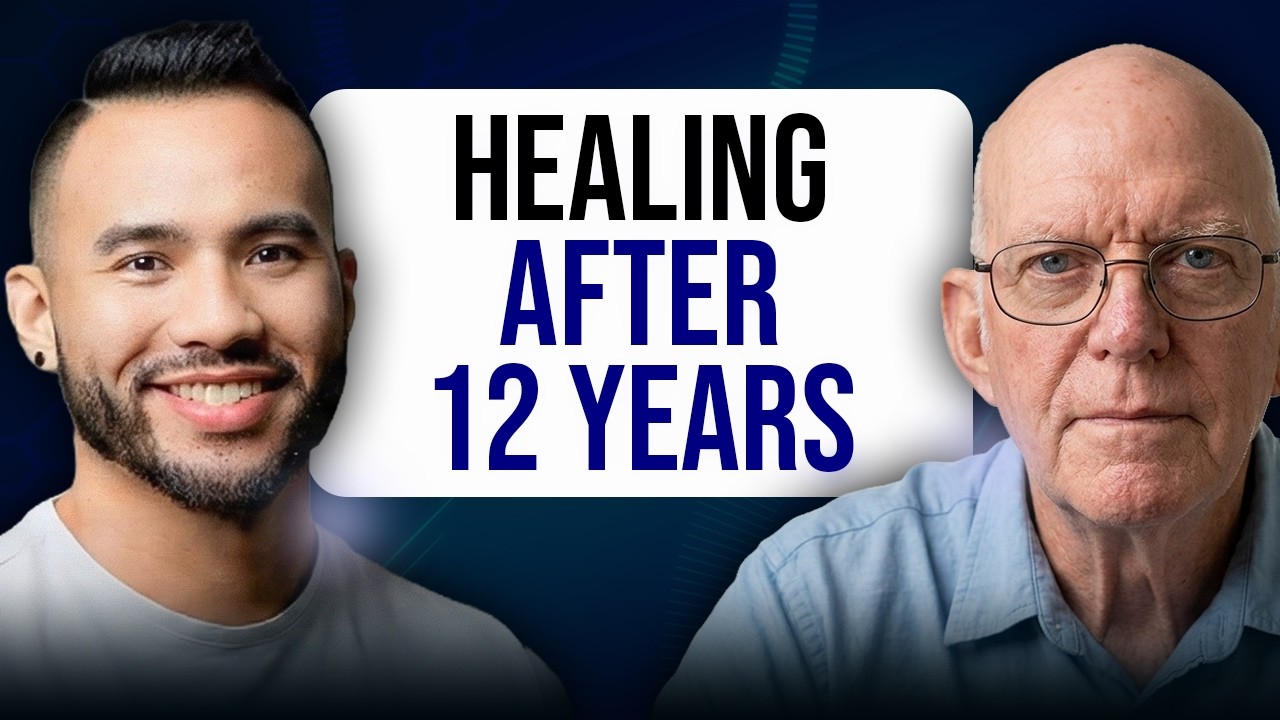
Watch Greg's full recovery interview
"I hadn't been this active in fifteen years."
Individual results vary. This is one person's experience and is not a guarantee of specific outcomes.
Key Takeaways From Greg's Recovery
| Condition: | ME/CFS. It arrived overnight when he was 53 and stayed for twelve years. |
| Severity: | Between couch bound and house bound. He gave up his garden and his workshop and saved every scrap of energy to hold down his job until his pension. |
| What worked: | CFS Recovery's recovery system, built on nervous system retraining based on neuroplasticity protocols, plus monthly coaching and the activity expansion guide he kept a photo of on his phone. |
| Now: | Working more than 40 hours a week at 67, riding his bike, and traveling with his wife. |
Greg's Story: Living With ME/CFS
I live in Overland Park, Kansas, next to Kansas City. I've been married to my wife Debbie for 45 years and we have three grown children.
I woke up one morning at 53 and the world was completely different. I had no idea what happened. Really bad vertigo, brain fog, and if I leaned over at all I'd get so dizzy I could hardly walk. It didn't go away.
I went to my primary, did the MRI, did the blood work, and everything was fine. All she could suggest was an antidepressant, which frustrated me because I wasn't depressed. Then the specialists. Neurologist, rheumatologist. Nothing wrong. One rheumatologist did his little pinch test all over and told me, well, you don't have fibromyalgia, if you did you'd have a real problem. I had a real problem. Nobody could see it.
I gave up my two-acre garden and my shed where I did all my hobby work, and I saved any last bit of energy I had to hold down that job, because I wanted my pension in 2018. I made it. Nothing got better.
Then a neurology specialist told me I had chronic fatigue and there wasn't anything that could be done. She said to sell everything, move to town and rest. And whatever I did, don't do anything that makes symptoms increase, because if you do you'll get worse. That was the worst thing anybody could have told me, because it trained me in a way that's false. When you believe that for years, it's really hard to overcome.
From 2012 to 2020 I didn't know one other person with this. I had no connection to anybody. That was hard. Then I found recovery stories online and got real hope, but I thought hearing that people recover meant it would just happen on its own. Time doesn't heal this. You have to do the right steps.
I found Miguel's video in June 2024 and it laid out three things: it's how you respond to symptoms, adjustment periods are on the way rather than in the way, and when you increase stimulus you can dial back a little, then go again. I joined in November of 2024.
The turning point was in January 2025. Junior was running a call and talking about his activity expansion guide. I was at my table doing a jigsaw puzzle, and I got my phone out and took a picture of it. Every month or so I'd go back to that picture and save it again so it stayed close. In my hardest stretches I'd look at it and it said, right there, you can be extremely uncomfortable as long as it's manageable. And I'd tell myself, I can manage this.
In April I started going in a couple of hours a day at a casual workplace where I knew the owner. I volunteered at first. Those two hours would bring on a big adjustment period. The next day I went anyway. In three or four days those two hours weren't spiking near as much, so I went for three. Then one day I decided to take my lunch and stay until one o'clock, and that extra time was more stimulus again. You do it, you respond well, and after a while it's like my brain went, okay, I guess Greg's fine.
I also worked on the fears in my life. I grew up with some real physical trauma in how I was disciplined, and that made me hypervigilant, never wanting to make a mistake. I'd find myself at work stoking fear because I couldn't read a blueprint right. I had to keep telling myself, this is nothing dangerous, you've got time to learn this. I'm a Christian, and I'd carried a fear about how God saw me since I was very young. Starting in August of 2024 I preached the gospel to myself every day, and after six or eight months I realized I don't think that way anymore. That's pure brain retraining right there.
A few things I'd pass on. Develop a knowing that you're okay even when you don't feel okay. Don't ever tell yourself you did too much, because you didn't do too much. However I felt in the morning, I'd tell myself this is going to be a great day. And a few times a day I'd say, I am so happy that I am calm, confident, brave, healthy and recovered. Even when you don't believe it. It all shows safety to the brain.
The Science Behind ME/CFS Recovery
In ME/CFS, the nervous system can get stuck in a chronic stress response. Research suggests the issue may be functional rather than structural. Your nervous system may be stuck in protection mode, and even normal activities can feel overwhelming. This is what keeps symptoms like fatigue, brain fog, and insomnia cycling.
Nervous system retraining uses neuroplasticity, your brain's ability to rewire itself, to help shift out of that stuck state. Instead of managing symptoms, it may address the underlying pattern.
Before vs. After: Greg's Recovery
| Area | Before Recovery | After Recovery |
|---|---|---|
| Daily Life | Between couch bound and house bound | Working more than 40 hours a week at 67 |
| Work | Saving every scrap of energy just to hold his job | Lifting 10 to 50 pound pieces most of the day |
| Travel | Couldn't manage the two-hour drive to his daughter's | Maui for a 45th anniversary and a week in North Carolina |
| Activity | Gave up his two-acre garden and his workshop | Back on his bike |
| Beliefs | Told to rest and avoid anything that increased symptoms | Knows responding well to symptoms is what moves him forward |
Where Is Greg Now?
At 67, Greg works more than 40 hours a week in a job where he's lifting 10 to 50 pound pieces most of the day, he's back on his bike, and he and Debbie went to Maui for their 45th wedding anniversary and spent a week in North Carolina with friends. He says he hasn't been this active in 15 years. Greg made this progress through CFS Recovery's recovery system, built on nervous system retraining. This story is part of our 100+ hours of filmed recovery case studies with other people sharing their experiences on camera, in their own words.
We've helped people as young as 9 and as old as 86. People who've been dealing with this for 1 month to 69 years. People from bedridden to semi-functional and everywhere in between. 2,000+ clients across 50+ countries in our community.
Greg's Recovery Wins
Frequently Asked Questions
Can you recover from CFS after 12 years?
Greg had ME/CFS for twelve years before he made this progress, and CFS Recovery has helped people who'd been dealing with this for anywhere from 1 month to 69 years. How long you've had it isn't what determines whether you can move forward.
What is nervous system retraining?
Nervous system retraining uses neuroplasticity principles to help your brain and nervous system shift out of a stuck stress response. In CFS and long COVID, the nervous system often gets locked in a protective mode after a viral trigger or prolonged stress. Retraining aims to help it shift out of that protective mode. It's coaching-based, not medication-based.
How bad were Greg's symptoms before recovery?
Greg was between couch bound and house bound for years. He gave up his two-acre garden and his workshop and saved every bit of energy just to keep his job until his pension. A specialist told him nothing could be done and that he should sell up, move to town and rest. Read the full story above.
Where is Greg now after CFS?
At 67, Greg works more than 40 hours a week in a job where he lifts 10 to 50 pound pieces most of the day, rides his bike, and has travelled to Maui and North Carolina with his wife. His story is one of many in CFS Recovery's community of 2,000+ clients across 50+ countries.
Your Recovery Story Could Be Next
Every person on our Recovery Stories page once felt exactly like you do now. Exhausted. Skeptical. Wondering if recovery was even possible. Greg's story shows what's possible.
We use cookies to understand how people find us and to improve our content. See our privacy policy.