From Scared to Move to Walking, Swimming and Lifting Weights at 61
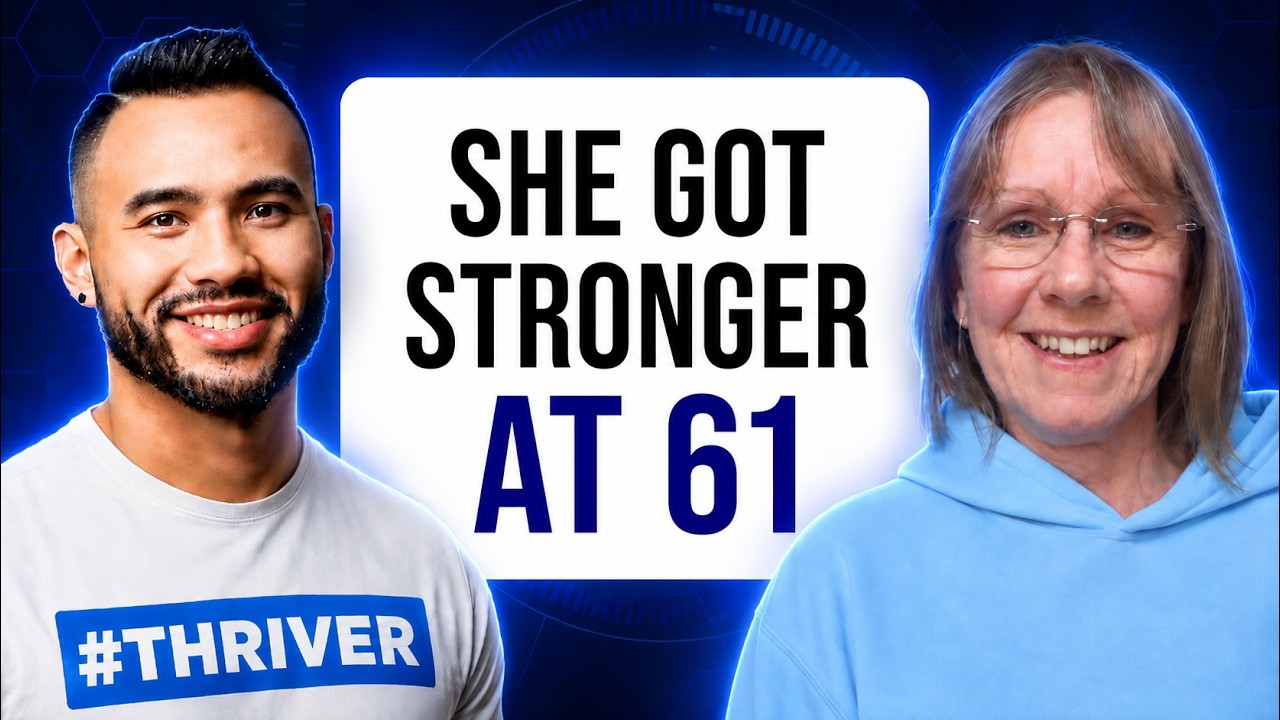
Watch Andrea's full recovery interview
"I woke up and went about my business normally, and then I thought, hold on a minute. I'd forgotten I had CFS."
Individual results vary. This is one person's experience and is not a guarantee of specific outcomes.
Key Takeaways From Andrea's Recovery
| Condition: | CFS. Symptoms arrived after a long stretch of family trauma, and she found us about four months in. |
| Severity: | Moderate. She stayed on her feet, but the vertigo got bad enough that she was scared to move around the house on her own. |
| What worked: | CFS Recovery's recovery system, built on nervous system retraining based on neuroplasticity protocols, plus a personalized plan from her coach and the daily community calls. |
| Now: | Socializing, traveling, walking, swimming, and building her strength back with weights at 61. |
Andrea's Story: Living With CFS
I'm from near Liverpool in the UK, and I was 61 when all of this arrived. We'd had a lot of trauma in the family since lockdown, and I think that's what affected me the most. Looking back, that's what set the whole thing off.
The tinnitus had probably been there quietly for a while, but it got louder at the same time the vertigo showed up. Then came this strange universal pain all over my body. I couldn't understand it, because I wasn't injuring myself. I wasn't exercising or doing anything unusual. And it wouldn't go. It hung around, and that frightened me. Now I know it was the fear that was keeping it going.
I went down the route of trying to get diagnosed and got no answers. Everything came back okay, normal. They'd send me to somebody about the tinnitus, then somebody else about my ears, then somebody about the pain. It all takes so long, and you're waiting on test results and scan results the whole time, which just feeds the thing. I saw a chiropractor. I saw a sports physio. I was already taking supplements. My poor husband was massaging me around the clock. Hot baths, you name it.
Then a penny dropped. I thought, this is my nervous system. It just doesn't make sense any other way. I started reading about it and looking online, and that's when I found CFS Recovery. What got me was that Miguel had done this himself from such a low baseline and come all the way back. He wasn't just talking about it.
The video that clicked was the one on neuroplasticity and brain retraining. Then the progress cycles and the adjustment periods. If you don't know about those, you have a good few days and think you're fine, then you have an awful time and think, what have I done wrong. That's soul destroying. Knowing how those cycles actually work is what got me out.
My biggest mind shift was realizing that fear was feeding the pain, and that I had control over that. That dialed the fear right down. I thought, okay, I've got this. I can sort this. I'm actually in control of it.
My coach Olga gave me a personalized plan and I stuck to it religiously. I'd told her I wanted to get back into some kind of exercise, and she said, do one wall press-up before your shower. One. I said, what? She said, yeah, just do one. So I did one.
My capacity had shrunk so far that my phone was permanently on dark mode, I was voice-messaging people instead of texting, and I wasn't watching television at all. For months, all I could manage was listening to podcasts. So watching TV for 15 minutes, or texting somebody back, those were enormous wins for me. I thought I was never going to be able to do that again.
There was a day at work when my whole body was aching and I thought, oh no, another hour and a half of feeling like this. And then I thought, well, I'm here, and I know what this is. Within minutes it eased off. From then on, when symptoms came after I'd done more, I stopped asking what I'd done wrong. Sometimes they'd go in minutes.
Then one day on a call I said, my awareness for today is that I actually forgot I had CFS. I woke up and went about my business normally. That's when you know it's happening. It's a natural process once it starts, because it's what your body is designed to do.
The Science Behind CFS Recovery
In CFS, the nervous system can get stuck in a chronic stress response. Research suggests the issue may be functional rather than structural. Your nervous system may be stuck in protection mode, and even normal activities can feel overwhelming. This is what keeps symptoms like fatigue, brain fog, and insomnia cycling.
Nervous system retraining uses neuroplasticity, your brain's ability to rewire itself, to help shift out of that stuck state. Instead of managing symptoms, it may address the underlying pattern.
Before vs. After: Andrea's Recovery
| Area | Before Recovery | After Recovery |
|---|---|---|
| Daily Life | Scared to move around the house alone because of the vertigo | Walking, swimming and out living life |
| Screens and Sound | Phone on dark mode, no television, everything too bright and too loud | Watching TV, texting, and sitting through a full two-hour meeting in a loud room |
| Social | Turning down invitations and staying home | Four to five hours at a family wedding, and fine the next day |
| Exercise | One wall press-up before a shower | A weights routine to build her strength back at 61 |
| Outlook | Frightened this was the rest of her life | Planning to fly abroad again |
Where Is Andrea Now?
Andrea is socializing again, walking and swimming, building her strength back with a weights routine at 61, and planning to fly abroad for the first time since this started. Andrea made this progress through CFS Recovery's recovery system, built on nervous system retraining. This story is part of our 100+ hours of filmed recovery case studies with other people sharing their experiences on camera, in their own words.
We've helped people as young as 9 and as old as 86. People who've been dealing with this for 1 month to 69 years. People from bedridden to semi-functional and everywhere in between. 2,000+ clients across 50+ countries in our community.
Andrea's Recovery Wins
Frequently Asked Questions
Can you recover from CFS at 61?
Andrea was 61 when her symptoms started, and she's now walking, swimming, lifting weights, socializing and traveling again. CFS Recovery has worked with people as young as 9 and as old as 86, and with people who've been dealing with this for 1 month to 69 years. Age on its own isn't what determines whether someone makes progress.
What is nervous system retraining?
Nervous system retraining uses neuroplasticity principles to help your brain and nervous system shift out of a stuck stress response. In CFS and long COVID, the nervous system often gets locked in a protective mode after a viral trigger or prolonged stress. Retraining aims to help it shift out of that protective mode. It's coaching-based, not medication-based.
How bad were Andrea's symptoms before recovery?
Andrea stayed on her feet, but the vertigo got bad enough that she was scared to move around by herself in case she fell. She also had tinnitus, pain across her whole body, fatigue, and enough light and sound sensitivity that she stopped watching television for months and could only listen to podcasts. Read the full story above.
Where is Andrea now after CFS Recovery?
Andrea is socializing again, walking and swimming, building her strength back with a weights routine, and planning to fly abroad. Her story is one of many in CFS Recovery's community of 2,000+ clients across 50+ countries.
Your Recovery Story Could Be Next
Every person on our Recovery Stories page once felt exactly like you do now. Exhausted. Skeptical. Wondering if recovery was even possible. Andrea's story shows what's possible.
We use cookies to understand how people find us and to improve our content. See our privacy policy.