From Crawling Up the Stairs to Hiking Again at 55
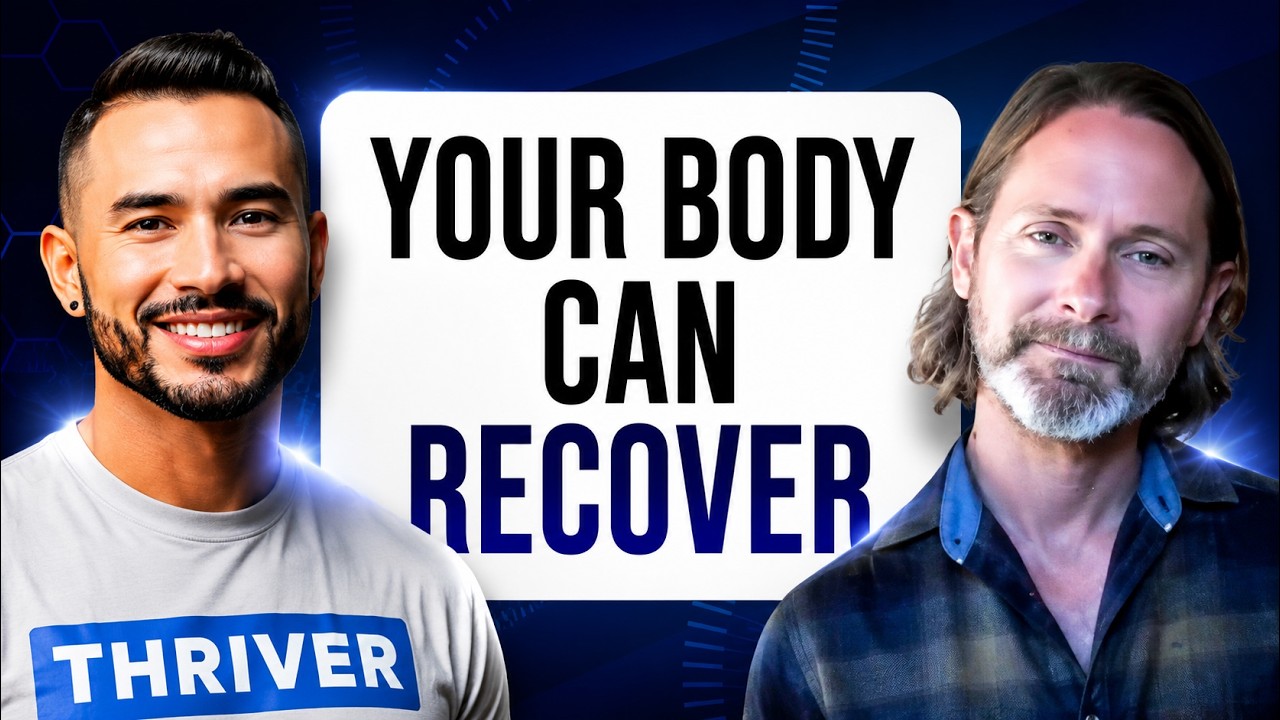
Watch Adam's full recovery interview
"I'm enjoying life way better than even before I was sick."
Individual results vary. This is one person's experience and is not a guarantee of specific outcomes.
Key Takeaways From Adam's Recovery
| Condition: | Long COVID. He caught COVID in May after years of chronic stress, went back to work too early, and the longer illness started from there. |
| Severity: | Housebound and mostly couch bound. He had to crawl or shimmy up and down the stairs, with burning and cramping through both thighs and both biceps. |
| What worked: | CFS Recovery's recovery system, built on nervous system retraining based on neuroplasticity protocols. He started in the Academy, moved into Platinum, and leaned on the coaching, the community calls and what he calls patient persistence. |
| Now: | Gardening on a steep property, walking every day, stretching, easing back into weights, and out on light hikes at 55. |
Adam's Story: Living With Long COVID
I live on the central coast of California now, close to Santa Cruz, though I grew up in Rogers, Arkansas. In the winter of 2015 we moved up here so I could take a job with a large tech firm in Silicon Valley. That was the thing I'd been chasing since I graduated. And then somewhere around the fall of 2018 the shine wore off, and it stayed worn off right up until I got sick.
Life before I got sick was all about work. Evenings, weekends, I was preoccupied with it. It was hard for me to be present with my partner Zoe, or to enjoy anything outside of work, because I was so exhausted. On top of that I had an hour's commute in and an hour back on a stressful, dangerous highway. And I was still trying to work out six or seven times a week, so my body was getting no rest at all. Sleep was an issue. My mood was sour a lot of the time, which isn't my natural state. That went on for years.
I can look back now and see the early signs. The sleep problems. The mood swings. Coming home at night with this horrible feeling in my head that I couldn't shake, that feeling of being stressed for so long that it doesn't switch off. In the weeks before I got sick I'd snapped at work twice, once at my manager and once at someone I managed, and that was completely uncharacteristic. I had an eye twitch. I was already at wit's end.
I got COVID in May. It was the sickest I've ever been, and it took about three weeks before I felt like I could edge back into work. I did take it easy for a few days working from home, and even those were rough. I'd lose energy quickly. A bit of lightheadedness, a bit of spaciness. Did that stop me going back in and making the commute? No. That lasted a week, and during that week I had a couple of stretches of dizziness. I ignored them and pushed on. By the end of that week I came home worn out with a bad headache, and the next morning I woke up knowing something was wrong. Exhausted, brain fog, really out of it. And I still tried to go work out.
The first few months were brain fog, palpitations and a high heart rate. The palpitations weren't only in my chest either. I'd get these pulses at the base of my skull that would travel up, and that had me worried. Sleep got worse, so I got more tired. Then came the anxiety and the worry, and then a feeling I'd never had before and hope I never have again. I'd curl up and hold Zoe as tight as I could and it still wasn't enough. There was a stretch where the worry and the sleeplessness got loud enough that I went to the emergency room looking for help, and I didn't find any answers there either.
Then something strange happened. Those first symptoms started coming down. And I was angry about everything that had happened, so I went back to the thing that had always been my support: exercise. I had this idea that I was going to push myself back into health. After a few rounds of workouts I noticed a burning in my thighs and in both biceps. I ignored it. A few days later I was walking half a mile to a therapist's appointment and both thighs just seized up. Full cramp. I had to peg-leg the rest of the way. A day or so after that my biceps did the same thing, and the pain didn't go away. Imagine both biceps and both thighs in a full cramp, that level of tightness and bracing, and you can't move.
That's when I became housebound and mostly couch bound. Fatigue showed up, which hadn't really been there before. Muscle spasms and twitches started all over my body from the neck down, constant and random, and that had me freaked out too. This was the tail end of August 2024.
In November I got in to a long COVID clinic in the Bay Area. They diagnosed post-viral fatigue syndrome and wrote me a prescription, and beyond that there was nothing about root causes. Nothing except rest. No guidance on what to do or what not to do. I started listening to recovery podcasts obsessively, and in January 2025 I took an online course I'd read about. It was helpful for knowledge, and there was good fundamental advice in there about staying calm in how you react to symptoms. But it was still all me. I was still out here on my own, trying my hardest.
My biggest problem in that stretch was all-or-nothing thinking. I'd get a day where symptoms were low and pain was low, and I'd use all of it. I was so excited by how I felt that out I'd go. A walk, the farmers market. And sure enough that night or the next morning I'd feel horrible and the symptoms were back. That happened a few times. Looking back, those were opportunities to start recovering, and I just didn't have the training to use them.
Before I joined I'd hit a point of acceptance, and that was extremely hard for me. I'd been fighting the illness, fighting the symptoms, trying to wish them away. Then one day it broke. I broke, and I accepted what had happened to me. That was a significant point, because I think you have to have that before you can really start.
I found CFS Recovery around May or June 2025, first in the Academy and then in Platinum. The difference was that I'd walked into a community and I was no longer alone in it. I still get emotional talking about that. Hundreds of people with the same symptoms, arriving at them by different routes, and coaches who had every one of them been through it themselves. It was a floor of support. Think of college: there's the textbook and there's the professor, and then there are the use cases that turn the theory into something practical. The calls are the use cases, and you get them constantly.
One of my first wins was the stairs. I couldn't take stairs at all. I'd crawl or shimmy up and down them. The instruction was to start with two or three stairs, come back down, and do only that for two weeks. Then bump it up by a couple. Not a lot. Four or five, repeat. I did it, and it worked. That was the opposite of everything I'd done my whole life. I had to absolutely retire the pushing. What I learned instead was patient persistence. There was never going to be a miracle morning where I woke up 90 percent better.
From there the small wins started stacking into something with momentum. Helping with the dishes. Cleaning the cat boxes, and I've never been so happy about cleaning a cat box. A bit of driving. Sleep got better. Pain came down. The muscle spasms settled. And the coaches are big on letting joy back in, which I'd pushed away entirely once I got sick. We're lucky to be surrounded by nature here, so I'd get myself outside and sit and listen and observe. Music I like. Shows that make me laugh. Your nervous system loves that, and it rewards you for it.
In August 2025 I resigned. Because I'd made work my life's purpose, that was an excruciating decision. But I don't believe you heal in the same environment that made you sick, or in the same circumstances that made you sick, and one of the key circumstances was my job. So I made the call.
A lot of this recovery has been self-discovery. Perfectionism, hyper-independence, hypervigilance, suppressing my emotions rather than feeling them, being wired to avoid criticism and conflict. Those came out of a childhood where there was a lot of conflict at home, and where approval and love felt tied to achievement and performance. I'd also developed a high capacity to tolerate the intolerable. Those grooves are decades deep, so they're not gone. A lot of it is just being aware, catching yourself, and practicing the behavior you want.
About a month and a half ago I had a few days of a feeling I couldn't name, and it hit me that I was identifying with being recovered. That doesn't mean I'm 100 percent and it's over. My analogy is that the cast has come off. The bone has healed, but there's atrophy, and now you get the muscle and the ligaments back. There's a lot of normal in my life. I'm gardening with Zoe on a heavily sloped property, so the legs get worked every day just moving around. Running errands, cooking, socializing, a concert, going out to eat, and a lot of that on my own again. Thirty to forty minutes of stretching daily. I've started some weights and bodyweight movements, slowly, on purpose. I walk a lot, and we've started going out on light hikes. The strenuous ones are waiting for when the time is right.
There's a term a lot of us have heard, the survival dance. I was in that from about seven or eight years old until a year or two ago. Now I want to be in a soulful dance instead. And I owe a tremendous amount to Zoe, who was my caretaker through all of it.
The Science Behind Long COVID Recovery
In Long COVID, the nervous system can get stuck in a chronic stress response. Research suggests the issue may be functional rather than structural. Your nervous system may be stuck in protection mode, and even normal activities can feel overwhelming. This is what keeps symptoms like fatigue, brain fog, and insomnia cycling.
Nervous system retraining uses neuroplasticity, your brain's ability to rewire itself, to help shift out of that stuck state. Instead of managing symptoms, it may address the underlying pattern.
Before vs. After: Adam's Recovery
| Area | Before Recovery | After Recovery |
|---|---|---|
| Stairs | Crawling or shimmying up and down them | Walking them, and out on light hikes |
| Daily Life | Housebound and mostly on the couch | Gardening, cooking, running errands and driving himself |
| Work | A two-hour daily commute on top of years of chronic stress | Resigned in August 2025 and built a life that supports his health |
| Exercise | Pushing through workouts until both thighs and biceps seized | Daily stretching, plus weights and bodyweight movements taken slowly |
| Outlook | What he calls the survival dance, from about age seven | What he calls a soulful dance, enjoying life more than before he got sick |
Where Is Adam Now?
Adam is gardening, walking every day, stretching, easing back into weights and out on light hikes. He's driving, cooking, running errands and socializing again, and he says he's enjoying life more than he did before he got sick. Adam made this progress through CFS Recovery's recovery system, built on nervous system retraining. This story is part of our 100+ hours of filmed recovery case studies, with other people sharing their experiences on camera, in their own words.
We've helped people as young as 9 and as old as 86. People who've been dealing with this for 1 month to 69 years. People from bedridden to semi-functional and everywhere in between. 2,000+ clients across 50+ countries in our community.
Adam's Recovery Wins
Frequently Asked Questions
Can you recover from long COVID after two years?
Adam was dealing with this for about two years before he reached the point he's at today. CFS Recovery has worked with people who've been dealing with this for 1 month to 69 years, and with people as young as 9 and as old as 86. How long it's been going on isn't on its own what determines whether someone makes progress.
What is nervous system retraining?
Nervous system retraining uses neuroplasticity principles to help your brain and nervous system shift out of a stuck stress response. In CFS and long COVID, the nervous system often gets locked in a protective mode after a viral trigger or prolonged stress. Retraining aims to help it shift out of that protective mode. It's coaching-based, not medication-based.
How bad were Adam's symptoms before recovery?
Adam was housebound and mostly couch bound. He had to crawl or shimmy up and down stairs, and both his thighs and both biceps would seize into a full cramp that didn't let go. He also had fatigue, brain fog, palpitations, sleep problems, anxiety, and muscle spasms and twitching from the neck down.
What made the biggest difference for Adam?
Three things, in his words. Patient persistence, which meant two or three stairs repeated for two weeks rather than pushing. Responding well to symptoms, a poor night's sleep, a hard moment with someone, traffic or the news. And putting himself in an environment that supported healing, which for him meant leaving the job that had kept him under chronic stress for years.
Your Recovery Story Could Be Next
Every person on our Recovery Stories page once felt exactly like you do now. Exhausted. Skeptical. Wondering if recovery was even possible. Adam's story shows what's possible.
We use cookies to understand how people find us and to improve our content. See our privacy policy.